
Science & Studies
Understand the technology. Verify the evidence.
Two technologies for your everyday water. Explore how they work, the available results and what those results actually establish.

An identifiable source for every claim.
We distinguish how a technology works, the features of our bottles and tests performed on a sample. Each answers a different question.
HYNØX. Activated carbon, for water that is already drinkable.
How it works
Activated carbon adsorbs certain compounds onto its surface. It is used, among other things, to address taste and odour. Performance depends on the carbon, filter design and treatment conditions. [1] [2]
In your bottle
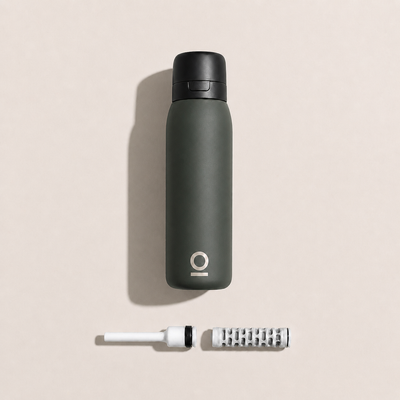
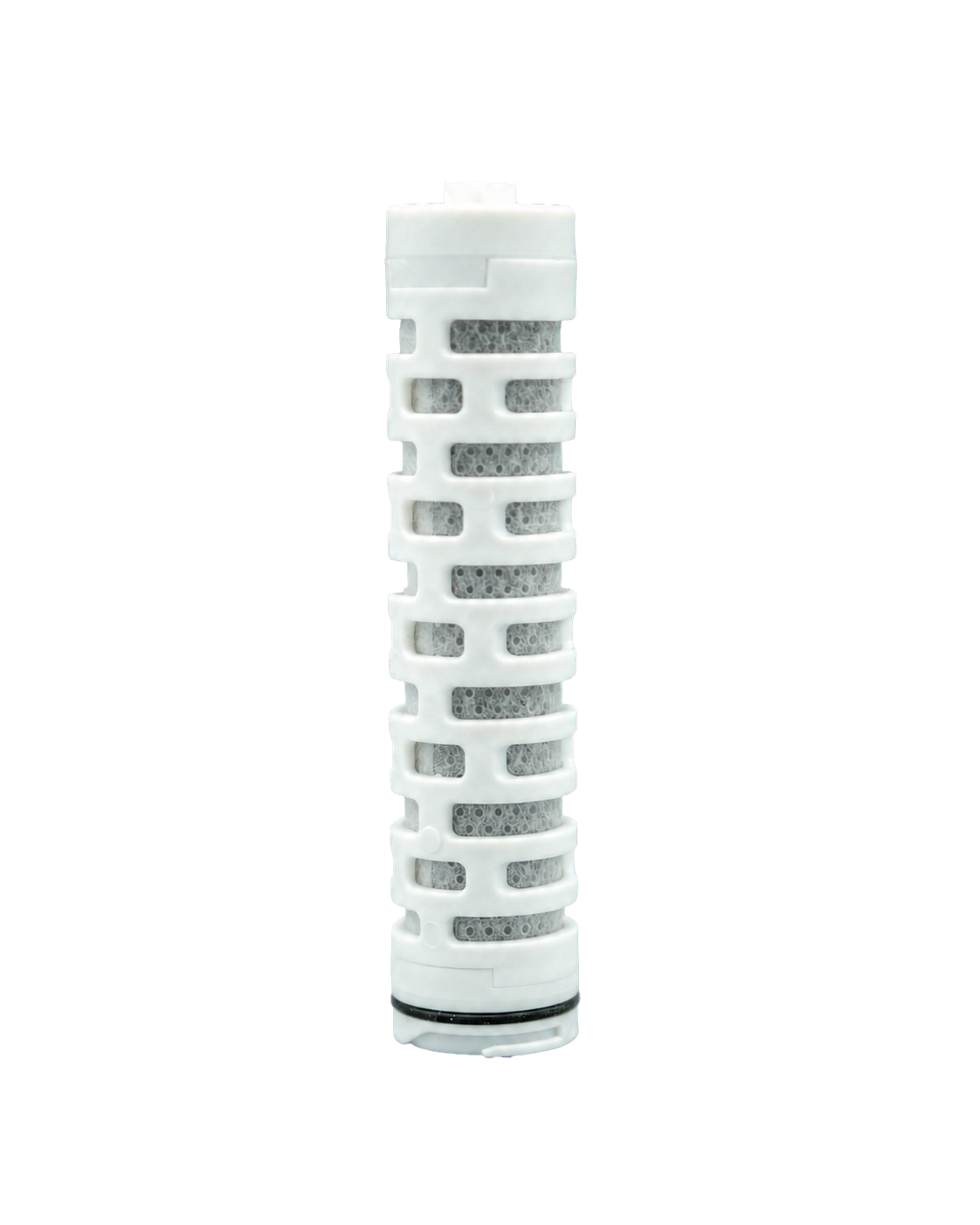
The HYNØX activated-carbon cartridge sits inside the straw. It is intended for water that is already drinkable, including tap water.
What this does not establish
No HYNØX-specific reduction percentage is presented here. Activated carbon alone does not establish performance against bacteria, viruses, PFAS, heavy metals or microplastics. HYNØX does not make river or lake water drinkable.
One cartridge. Every detail.
The slotted casing holds the filter medium. Scroll to explore the cartridge and discover what it contains.
Carbon at the heart of the filter.
The casing moves aside to reveal the medium. Its porous structure can retain certain molecules responsible for taste and odours.
Water passes through. You enjoy.
As you drink, water passes through the activated-carbon medium and up the straw. Always use water that is already safe to drink. Replace the entire cartridge about every two months, depending on use.
Découvrir le filtre et son renouvellementLUMØS. UV-C self-sterilisation, explained and measured.
How it works
UV is used to disinfect water. Results depend on the system and treatment conditions. UV is not a process for removing chemical contaminants. [3]
In your bottle
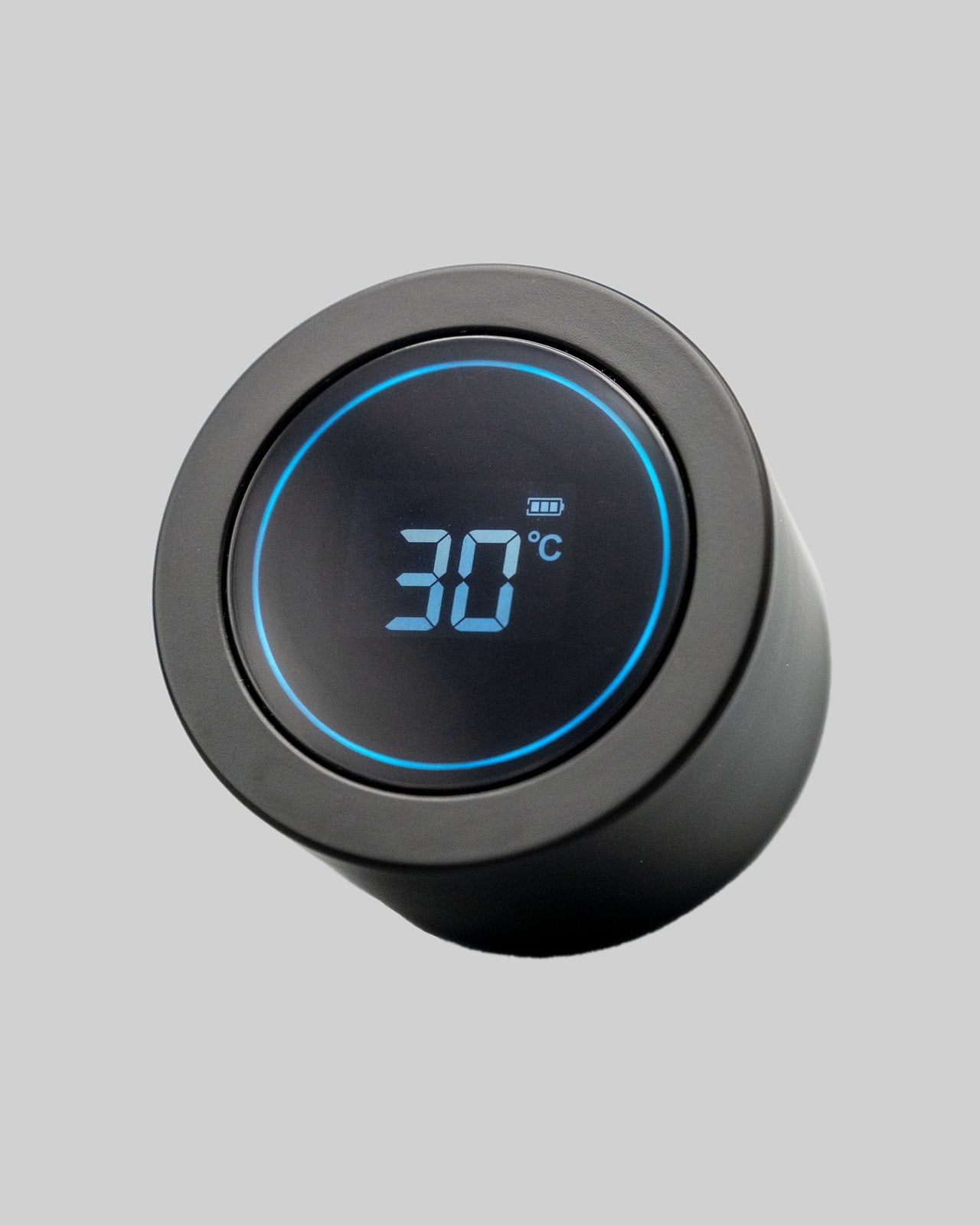
LUMØS has a UV-C source beneath its cap. Its standard cycle lasts 180 seconds with the bottle closed. This describes the product, not the historical test, whose treatment duration is not recorded.
The sample, before and after UV.
Historical results presented for LUMØS. Units remain visible so the values can be read correctly.
The values below describe one sample before and after UV treatment. They do not guarantee the same result in all water or establish that any water can be made drinkable.


| Parameter | Before UV | After UV | Unit |
|---|---|---|---|
| CLOSS | 0 | 0 | UFC/100 ml |
| COLF | 7 | 0 | UFC/100 ml |
| COLT | 27 | 0 | UFC/100 ml |
| STR | 0 | 0 | UFC/100 ml |
| GT36 | 0 | 0 | UFC/ml |
| GT22 | 3,6 | 0 | UFC/ml |
“0” means no colonies were detected under the test conditions.
It does not mean the absolute absence of every microorganism. CFU stands for colony-forming unit: a count of microorganisms that can grow under the test conditions.
Method and traceability
The comparison concerns a sample before and after UV treatment. Treatment duration is not specified in the available results. The laboratory name, date, detailed method and product or batch reference must be read in the original report.
The complete original report is not yet available to download on this page.
How to read evidence.
Useful evidence identifies the product or batch, laboratory, date, method, conditions and measurement unit. A photograph illustrates the test; it does not replace its report. A publication about a technology is not a HYDROS product certification.
Sources you can read.
General references consulted on 23 September 2026. They explain the technologies; they are not HYDROS tests or certifications.
- US EPA — Overview of Drinking Water Treatment Technologies
Activated carbon: mechanism, applications and factors affecting treatment.
- CDC — About Choosing Home Water Filters
Choosing a filter for its purpose, including taste and odour.
- CDC — About Home Water Treatment Systems
Home treatment: how UV works and its limits for chemical contaminants.